Hosting a Fundraiser or Group Event? Why a Bowling Center Makes It Easy
Frame Construction and Long-Term Stability
Hardwood vs. MDF Frame Construction
Solid hardwood frames, typically poplar or maple, hold their dimensions across seasonal humidity changes and provide a stable anchor for the leg bolts that carry the table's total weight. MDF and particle board frames are used in budget builds and perform adequately in climate-controlled rooms but will swell, delaminate, and lose structural integrity in spaces with humidity fluctuations above 20 percent, which is relevant in Indiana where interior humidity can swing from 25 percent in winter to 70 percent in summer without a whole-home humidity management system in place.
Leg levelers on quality tables use a threaded steel foot of at least 2.5 inches in diameter. Narrow plastic leveling feet concentrate load on a small contact point, which can compress or crack hardwood flooring over time and introduce micro-shifts in table level that accumulate.
The cabinet and frame beneath the slate carry every force the game puts on the table, and wood quality here is not cosmetic.
TIP: After initial installation, re-level your table at 30 days and again at 90 days. Slate and frame components settle as wood fibers equilibrate to the room's ambient humidity, and the first season of use is when most leveling drift occurs.
Quick Answer: A bowling center solves the two hardest parts of planning a fundraiser or group event at once: a space that already fits a crowd, and an activity everyone can join without instructions or special skill. Lanes, tables, and open floor space come built for groups, the venue handles setup and cleanup, and an activity that scales from ten guests to over a hundred means you are not stitching together a room, a caterer, and entertainment from three different vendors. For a PTA fundraiser, a nonprofit night, a school reunion, or a company gathering, that combination turns a stressful planning list into a single phone call and one date on the calendar.
You have volunteered to plan the event, or maybe it landed on your desk because you are the organized one. Either way, the guest list is growing, the date is set, and you are staring down the same questions every organizer in Vigo County eventually asks: where does everyone go, what do they actually do once they get there, and how do you keep a room full of people with different ages and interests from splitting into three bored corners within the first half hour.
A banquet hall gives you a room and folding chairs. A restaurant back area gives you a table and a bill. Neither one gives you an activity, and an activity is what turns a group of people standing around into an event people talk about afterward.
Frame Construction and Long-Term Stability
Hardwood vs. MDF Frame Construction
Solid hardwood frames, typically poplar or maple, hold their dimensions across seasonal humidity changes and provide a stable anchor for the leg bolts that carry the table's total weight. MDF and particle board frames are used in budget builds and perform adequately in climate-controlled rooms but will swell, delaminate, and lose structural integrity in spaces with humidity fluctuations above 20 percent, which is relevant in Indiana where interior humidity can swing from 25 percent in winter to 70 percent in summer without a whole-home humidity management system in place.
Leg levelers on quality tables use a threaded steel foot of at least 2.5 inches in diameter. Narrow plastic leveling feet concentrate load on a small contact point, which can compress or crack hardwood flooring over time and introduce micro-shifts in table level that accumulate.
The cabinet and frame beneath the slate carry every force the game puts on the table, and wood quality here is not cosmetic.
TIP: After initial installation, re-level your table at 30 days and again at 90 days. Slate and frame components settle as wood fibers equilibrate to the room's ambient humidity, and the first season of use is when most leveling drift occurs.
Why Group Events Get Complicated Fast
The math behind a group event is simple to state and hard to solve. You need a space large enough for the full guest count, a schedule that keeps people occupied for two or three hours, and a plan that works whether your crowd is ten people or a hundred and ten. Most venues solve one piece of that and leave you to figure out the rest on your own.
Rent a conference room and you still need to book a caterer, borrow a speaker system, and come up with something for people to do between the welcome remarks and the goodbyes. Book a restaurant and you get food handled, but the room is built for sitting and talking, not for the kind of shared activity that gets strangers and coworkers actually interacting. For a fundraiser specifically, there is an added layer: you need something that feels like an event worth paying to attend, not just a room with a donation jar at the door.
Terre Haute has plenty of meeting rooms and plenty of restaurants. What it does not have in abundance is a single venue that solves the space problem, the activity problem, and the food problem all in one booking, which is exactly the gap a bowling center fills.
Frame Construction and Long-Term Stability
Hardwood vs. MDF Frame Construction
Solid hardwood frames, typically poplar or maple, hold their dimensions across seasonal humidity changes and provide a stable anchor for the leg bolts that carry the table's total weight. MDF and particle board frames are used in budget builds and perform adequately in climate-controlled rooms but will swell, delaminate, and lose structural integrity in spaces with humidity fluctuations above 20 percent, which is relevant in Indiana where interior humidity can swing from 25 percent in winter to 70 percent in summer without a whole-home humidity management system in place.
Leg levelers on quality tables use a threaded steel foot of at least 2.5 inches in diameter. Narrow plastic leveling feet concentrate load on a small contact point, which can compress or crack hardwood flooring over time and introduce micro-shifts in table level that accumulate.
The cabinet and frame beneath the slate carry every force the game puts on the table, and wood quality here is not cosmetic.
TIP: After initial installation, re-level your table at 30 days and again at 90 days. Slate and frame components settle as wood fibers equilibrate to the room's ambient humidity, and the first season of use is when most leveling drift occurs.
One Venue, Every Piece Handled
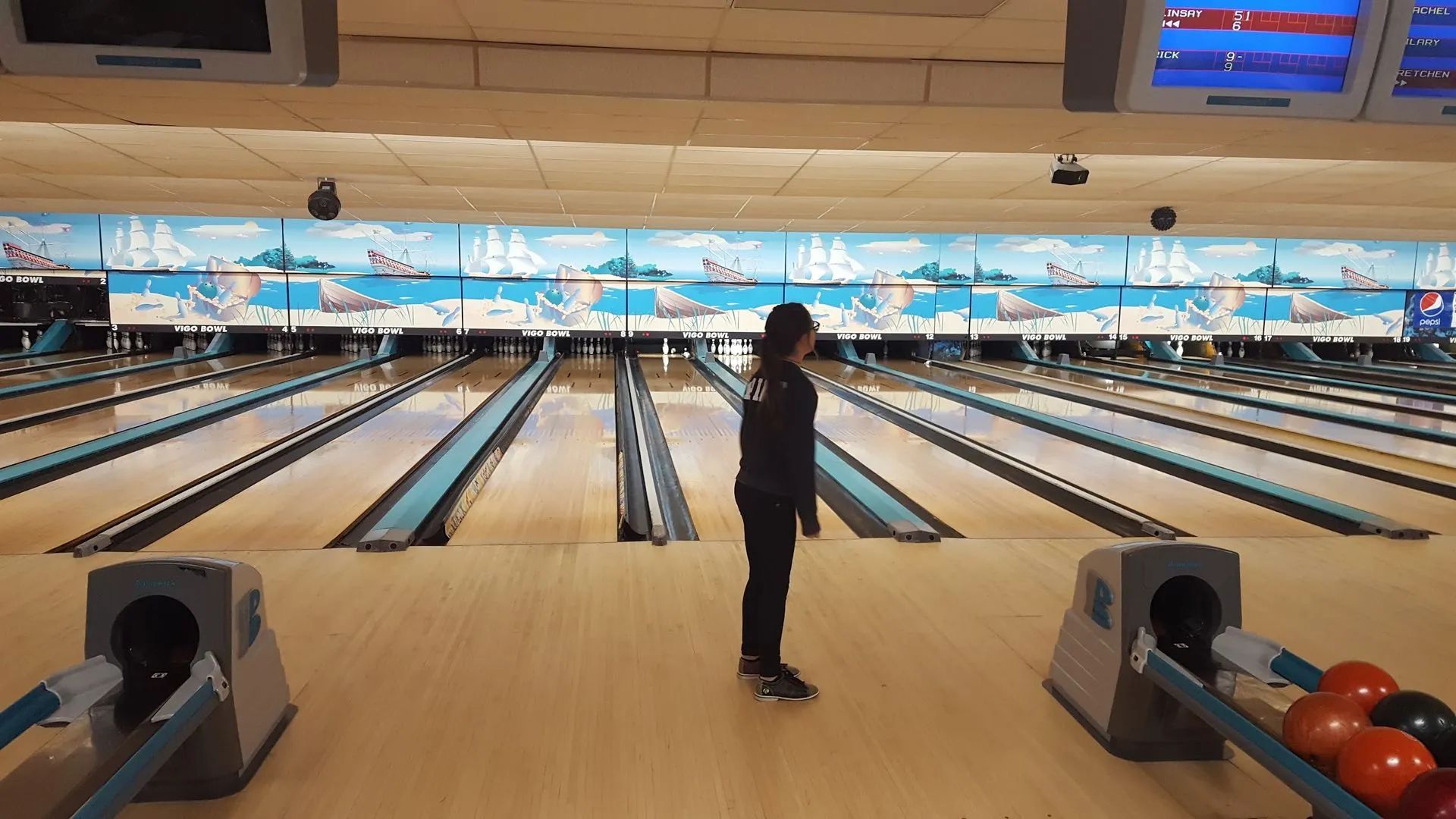
A bowling center is built around groups by design. Multiple lanes mean you are not squeezing a crowd into a space meant for a dozen people, and lane space scales cleanly. A block of six lanes comfortably seats a group that would overwhelm most private dining rooms, and a full house of lanes can handle a crowd that no back room in town could hold. Pool tables and open floor space beyond the lanes give people somewhere to drift when they want a break from bowling, which matters more than organizers usually expect at a mixed age or mixed interest event.
The activity is already built in. Nobody has to design a game, book entertainment, or figure out what happens after the speeches. Lanes are ready to go, shoes are available at the counter, and the format explains itself. That takes an entire category of planning off your list, and it is the category that tends to eat the most time when you are also managing invitations, a guest count, and whatever else your fundraiser or gathering needs.
Food and drinks are already part of the venue, so there is no separate caterer to coordinate, no delivery window to plan around, and no worry about a truck showing up late to a room full of hungry guests. A snack bar serving pizza, wings, and drinks means the food question is solved the moment you book the space, not a separate line item you have to chase down.
Frame Construction and Long-Term Stability
Hardwood vs. MDF Frame Construction
Solid hardwood frames, typically poplar or maple, hold their dimensions across seasonal humidity changes and provide a stable anchor for the leg bolts that carry the table's total weight. MDF and particle board frames are used in budget builds and perform adequately in climate-controlled rooms but will swell, delaminate, and lose structural integrity in spaces with humidity fluctuations above 20 percent, which is relevant in Indiana where interior humidity can swing from 25 percent in winter to 70 percent in summer without a whole-home humidity management system in place.
Leg levelers on quality tables use a threaded steel foot of at least 2.5 inches in diameter. Narrow plastic leveling feet concentrate load on a small contact point, which can compress or crack hardwood flooring over time and introduce micro-shifts in table level that accumulate.
The cabinet and frame beneath the slate carry every force the game puts on the table, and wood quality here is not cosmetic.
TIP: After initial installation, re-level your table at 30 days and again at 90 days. Slate and frame components settle as wood fibers equilibrate to the room's ambient humidity, and the first season of use is when most leveling drift occurs.
Built for a Crowd That Does Not All Know Each Other Yet
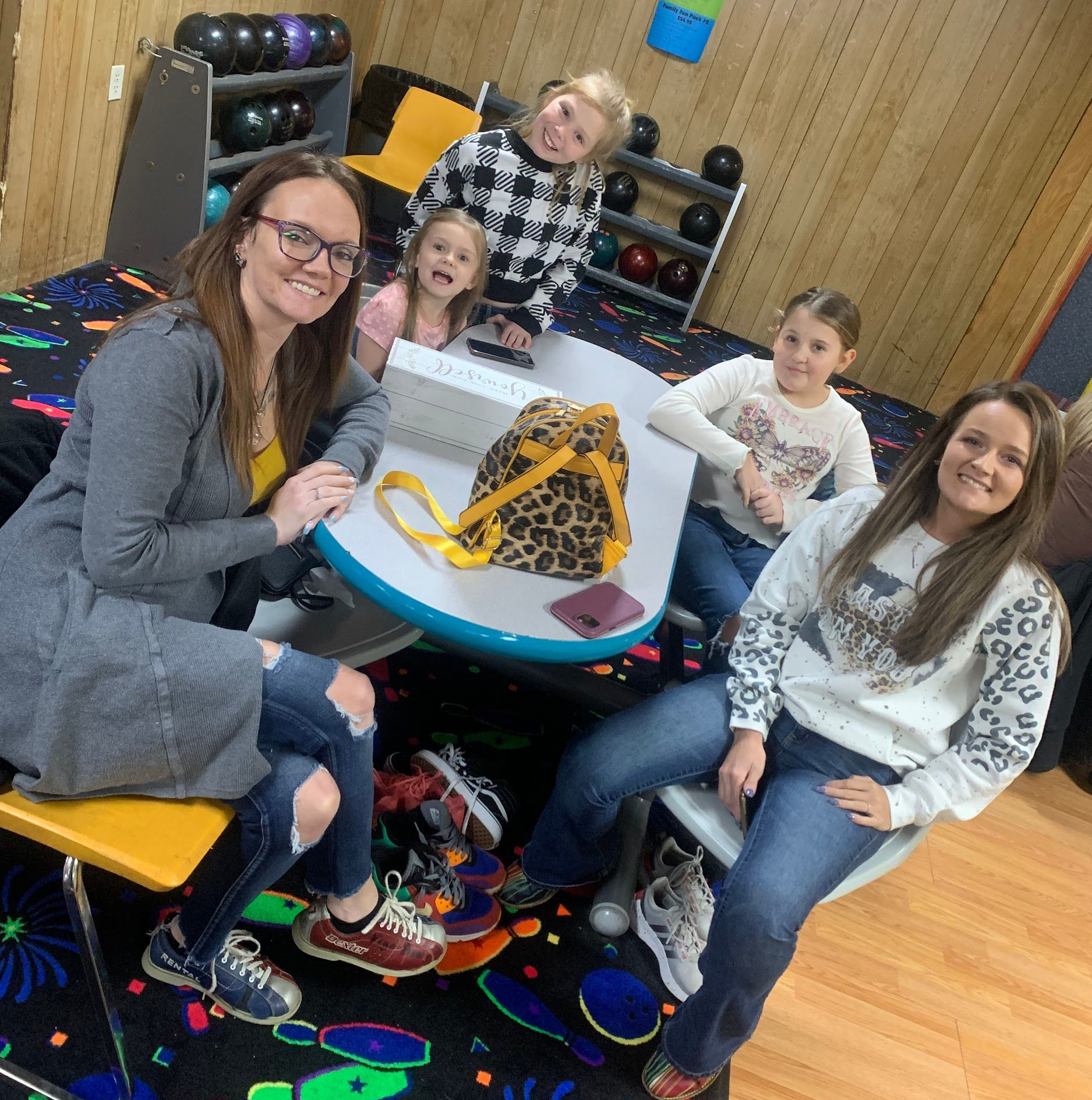
Fundraisers and group events often bring together people who have never met, from a school community, a nonprofit's donor base, a company's departments, or a reunion crowd catching up after years apart. The activity you choose either helps that crowd mix or leaves them clustered with the people they already know.
Bowling solves this almost by accident. A lane naturally groups four to six people together, rotating turns in a way that gets everyone talking within the first few frames. There is no skill barrier keeping newcomers out, and there is no need to explain the rules to someone who has never picked up a ball before. That combination, an easy entry point plus a natural reason to rotate and interact, is exactly what separates an event people remember from one they merely attended.
Tip: Assign lanes by mixing familiar faces with new ones rather than letting friend groups self select, so guests who came alone or represent different parts of your organization end up bowling next to someone they have not met.
For a fundraiser specifically, that mixing matters for a reason beyond fun: donors and supporters who spend two hours bowling next to your organization's board members or staff walk away with a personal connection, not just a receipt for a ticket purchase.
Frame Construction and Long-Term Stability
Hardwood vs. MDF Frame Construction
Solid hardwood frames, typically poplar or maple, hold their dimensions across seasonal humidity changes and provide a stable anchor for the leg bolts that carry the table's total weight. MDF and particle board frames are used in budget builds and perform adequately in climate-controlled rooms but will swell, delaminate, and lose structural integrity in spaces with humidity fluctuations above 20 percent, which is relevant in Indiana where interior humidity can swing from 25 percent in winter to 70 percent in summer without a whole-home humidity management system in place.
Leg levelers on quality tables use a threaded steel foot of at least 2.5 inches in diameter. Narrow plastic leveling feet concentrate load on a small contact point, which can compress or crack hardwood flooring over time and introduce micro-shifts in table level that accumulate.
The cabinet and frame beneath the slate carry every force the game puts on the table, and wood quality here is not cosmetic.
TIP: After initial installation, re-level your table at 30 days and again at 90 days. Slate and frame components settle as wood fibers equilibrate to the room's ambient humidity, and the first season of use is when most leveling drift occurs.
Scaling From a Small Gathering to a Large One Without Starting Over
A lot of venues have a sweet spot. Book too few people and a large hall feels empty and awkward. Book too many and a small private room turns cramped and loud. A bowling center avoids that trap because the space itself scales with the crowd.
A smaller fundraiser or team gathering might use two or three lanes, leaving the rest of the floor open for check in tables, a raffle setup, or simply extra breathing room. A larger event, a company wide holiday gathering or a citywide fundraiser drawing a hundred plus guests, can take over a full block of lanes plus the surrounding floor space, arcade area, and pool tables without the room ever feeling like it was not built for that size. Organizers do not have to guess at a headcount months in advance and hope the room matches, because the same venue comfortably serves both ends of that range.
That flexibility also protects you against the reality of event planning, which is that RSVPs shift right up until the day of. A slightly smaller than expected turnout does not leave a bowling center looking empty the way it would leave a rented banquet hall half full. A slightly larger turnout does not require a scramble for extra chairs and tables, because the floor plan already has room to absorb it.
Frame Construction and Long-Term Stability
Hardwood vs. MDF Frame Construction
Solid hardwood frames, typically poplar or maple, hold their dimensions across seasonal humidity changes and provide a stable anchor for the leg bolts that carry the table's total weight. MDF and particle board frames are used in budget builds and perform adequately in climate-controlled rooms but will swell, delaminate, and lose structural integrity in spaces with humidity fluctuations above 20 percent, which is relevant in Indiana where interior humidity can swing from 25 percent in winter to 70 percent in summer without a whole-home humidity management system in place.
Leg levelers on quality tables use a threaded steel foot of at least 2.5 inches in diameter. Narrow plastic leveling feet concentrate load on a small contact point, which can compress or crack hardwood flooring over time and introduce micro-shifts in table level that accumulate.
The cabinet and frame beneath the slate carry every force the game puts on the table, and wood quality here is not cosmetic.
TIP: After initial installation, re-level your table at 30 days and again at 90 days. Slate and frame components settle as wood fibers equilibrate to the room's ambient humidity, and the first season of use is when most leveling drift occurs.
What Organizers Should Plan Around
Running a group event at a bowling center is simpler than most venues, but a few planning steps make the day go smoother for everyone involved, especially the organizer who is trying to enjoy the event they built instead of troubleshooting it the whole time.
Larger groups, generally anything beyond what fits comfortably on two or three lanes, do best when booked ahead rather than arriving and hoping for open lane availability, particularly on a Saturday when league play is already using part of the house. Reserving lanes and any adjoining space in advance means your group walks in to a floor that is already set up for them instead of waiting on availability while guests stand around.
It also helps to think through the shape of the day before you arrive. A fundraiser with a short program, an opening welcome, a raffle drawing, a closing thank you, works well when that program is scheduled between bowling frames rather than competing with the noise of an active lane. A quiet moment for announcements, followed by more open bowling time, keeps the event feeling organized without cutting into the part guests actually came for.
Groups that want a slightly more structured experience, a company gathering with a short icebreaker before open bowling, or a school fundraiser with a recognition segment for volunteers, can loop that into the lane time without needing a separate room or a pause in the action. The lanes stay part of the flow the whole time instead of becoming a side activity people drift to and from.
Frame Construction and Long-Term Stability
Hardwood vs. MDF Frame Construction
Solid hardwood frames, typically poplar or maple, hold their dimensions across seasonal humidity changes and provide a stable anchor for the leg bolts that carry the table's total weight. MDF and particle board frames are used in budget builds and perform adequately in climate-controlled rooms but will swell, delaminate, and lose structural integrity in spaces with humidity fluctuations above 20 percent, which is relevant in Indiana where interior humidity can swing from 25 percent in winter to 70 percent in summer without a whole-home humidity management system in place.
Leg levelers on quality tables use a threaded steel foot of at least 2.5 inches in diameter. Narrow plastic leveling feet concentrate load on a small contact point, which can compress or crack hardwood flooring over time and introduce micro-shifts in table level that accumulate.
The cabinet and frame beneath the slate carry every force the game puts on the table, and wood quality here is not cosmetic.
TIP: After initial installation, re-level your table at 30 days and again at 90 days. Slate and frame components settle as wood fibers equilibrate to the room's ambient humidity, and the first season of use is when most leveling drift occurs.
Why This Works So Well for Fundraisers Specifically
A fundraiser has a job beyond entertainment: it needs to feel worth attending, worth donating to, and worth telling other people about afterward. An activity everyone can join, paired with a room that naturally mixes your supporters and your organization's people, does a lot of that work on its own.
Compare it to the alternative most nonprofits default to, a rented hall with a silent auction table and a slideshow. That format asks guests to mingle politely for two hours and hope conversation happens organically. Bowling gives people something to actually do together, which tends to produce the kind of energy that makes a fundraiser feel successful rather than merely attended out of obligation.
It also gives your organization a built in story to tell afterward, in a thank you email or a follow up post: guests who bowled a few frames with the board chair, or a table of donors who ended up in friendly competition with a table of volunteers, are a more memorable image than a photo of people standing near a podium.
Frame Construction and Long-Term Stability
Hardwood vs. MDF Frame Construction
Solid hardwood frames, typically poplar or maple, hold their dimensions across seasonal humidity changes and provide a stable anchor for the leg bolts that carry the table's total weight. MDF and particle board frames are used in budget builds and perform adequately in climate-controlled rooms but will swell, delaminate, and lose structural integrity in spaces with humidity fluctuations above 20 percent, which is relevant in Indiana where interior humidity can swing from 25 percent in winter to 70 percent in summer without a whole-home humidity management system in place.
Leg levelers on quality tables use a threaded steel foot of at least 2.5 inches in diameter. Narrow plastic leveling feet concentrate load on a small contact point, which can compress or crack hardwood flooring over time and introduce micro-shifts in table level that accumulate.
The cabinet and frame beneath the slate carry every force the game puts on the table, and wood quality here is not cosmetic.
TIP: After initial installation, re-level your table at 30 days and again at 90 days. Slate and frame components settle as wood fibers equilibrate to the room's ambient humidity, and the first season of use is when most leveling drift occurs.
Making the Booking Simple for Your Group
Once you have a headcount and a rough date, the booking part itself is simple. Sharing your expected group size upfront helps match you to the right number of lanes and floor space, and flagging whether you want food included, a short program worked into the schedule, or a private feeling section away from regular open bowling lets the venue set the floor up to match what you are picturing.
Organizers who plan a few weeks out generally get the pick of dates and lane blocks, while those working closer to the event date can still usually be accommodated on weekdays, when league play does not compete for lane space the way it does on Saturdays.
Frame Construction and Long-Term Stability
Hardwood vs. MDF Frame Construction
Solid hardwood frames, typically poplar or maple, hold their dimensions across seasonal humidity changes and provide a stable anchor for the leg bolts that carry the table's total weight. MDF and particle board frames are used in budget builds and perform adequately in climate-controlled rooms but will swell, delaminate, and lose structural integrity in spaces with humidity fluctuations above 20 percent, which is relevant in Indiana where interior humidity can swing from 25 percent in winter to 70 percent in summer without a whole-home humidity management system in place.
Leg levelers on quality tables use a threaded steel foot of at least 2.5 inches in diameter. Narrow plastic leveling feet concentrate load on a small contact point, which can compress or crack hardwood flooring over time and introduce micro-shifts in table level that accumulate.
The cabinet and frame beneath the slate carry every force the game puts on the table, and wood quality here is not cosmetic.
TIP: After initial installation, re-level your table at 30 days and again at 90 days. Slate and frame components settle as wood fibers equilibrate to the room's ambient humidity, and the first season of use is when most leveling drift occurs.
Turning a Planning Headache Into an Easy Yes
The hardest part of organizing a fundraiser or group event is almost never the guest list. It is finding one place that solves the space, the activity, and the food all at once, without forcing you to become a part time event coordinator on top of everything else the role already asks of you.
A venue that has hosted fundraisers, company gatherings, school events, and reunions across Terre Haute and Vigo County for decades already has the lanes, pool tables, meeting space, and food service set up to handle a group your size. If you are staring down a guest list and a date on the calendar, a block of lanes reserved ahead of time is one less thing standing between you and an event that actually comes together.
Frame Construction and Long-Term Stability
Hardwood vs. MDF Frame Construction
Solid hardwood frames, typically poplar or maple, hold their dimensions across seasonal humidity changes and provide a stable anchor for the leg bolts that carry the table's total weight. MDF and particle board frames are used in budget builds and perform adequately in climate-controlled rooms but will swell, delaminate, and lose structural integrity in spaces with humidity fluctuations above 20 percent, which is relevant in Indiana where interior humidity can swing from 25 percent in winter to 70 percent in summer without a whole-home humidity management system in place.
Leg levelers on quality tables use a threaded steel foot of at least 2.5 inches in diameter. Narrow plastic leveling feet concentrate load on a small contact point, which can compress or crack hardwood flooring over time and introduce micro-shifts in table level that accumulate.
The cabinet and frame beneath the slate carry every force the game puts on the table, and wood quality here is not cosmetic.
TIP: After initial installation, re-level your table at 30 days and again at 90 days. Slate and frame components settle as wood fibers equilibrate to the room's ambient humidity, and the first season of use is when most leveling drift occurs.
Frequently Asked Questions
How many people can a bowling center realistically host for a group event?
It scales from about ten guests on a couple of lanes to well over a hundred across a full block of lanes and surrounding floor space, so you do not need to guess a venue size months ahead.
Do we need to bring in outside food, or is that handled at the venue?
Food and drinks are part of the venue, with a snack bar serving pizza, wings, and other options. There is no separate caterer to coordinate and no delivery window to plan around.
Is bowling a good fit for a crowd where most guests have never met?
Yes. Lanes naturally group four to six people and rotate turns, which gets strangers talking within the first few frames. It works better than a standard mingling format because no one has to force conversation.
How far ahead should we book for a larger group?
A few weeks out generally secures the best lanes and dates, especially on weekends when league play is already using part of the house. Weekday events are usually easier to accommodate on shorter notice.
Can we build a short program, like a welcome or a recognition segment, into the event?
Yes. A brief program works best between bowling frames rather than during active lane play, so announcements stay clear and guests return quickly to the activity they came for.
Is this a good option for a nonprofit fundraiser specifically, or is it better suited to casual gatherings?
Both. An easy to join activity and a room built for a crowd suit casual gatherings, and they give a fundraiser shared energy that a standard banquet hall format often struggles to create.
Frame Construction and Long-Term Stability
Hardwood vs. MDF Frame Construction
Solid hardwood frames, typically poplar or maple, hold their dimensions across seasonal humidity changes and provide a stable anchor for the leg bolts that carry the table's total weight. MDF and particle board frames are used in budget builds and perform adequately in climate-controlled rooms but will swell, delaminate, and lose structural integrity in spaces with humidity fluctuations above 20 percent, which is relevant in Indiana where interior humidity can swing from 25 percent in winter to 70 percent in summer without a whole-home humidity management system in place.
Leg levelers on quality tables use a threaded steel foot of at least 2.5 inches in diameter. Narrow plastic leveling feet concentrate load on a small contact point, which can compress or crack hardwood flooring over time and introduce micro-shifts in table level that accumulate.
The cabinet and frame beneath the slate carry every force the game puts on the table, and wood quality here is not cosmetic.
TIP: After initial installation, re-level your table at 30 days and again at 90 days. Slate and frame components settle as wood fibers equilibrate to the room's ambient humidity, and the first season of use is when most leveling drift occurs.
One Booking Turns Your Event Into Something Memorable
The hardest part of organizing a fundraiser or group event is rarely the guest list. It is finding one place that solves the space, the activity, and the food together, without turning you into a part time event coordinator. A bowling center brings lanes, floor space, and a snack bar under one roof, and the activity explains itself. Guests mix naturally, and the room scales with the crowd, so shifting RSVPs never leave you scrambling for chairs or facing empty space.
At Vigo Bowl, we have hosted fundraisers, company gatherings, school events, and reunions in Terre Haute, IN, for 1
years, and we have watched plenty of organizers relax once the venue question was settled. When the details are handled, you get to enjoy the event you built instead of troubleshooting it all night. Good planning and a room made for groups do most of the work, leaving time with your guests and a night people will talk about.